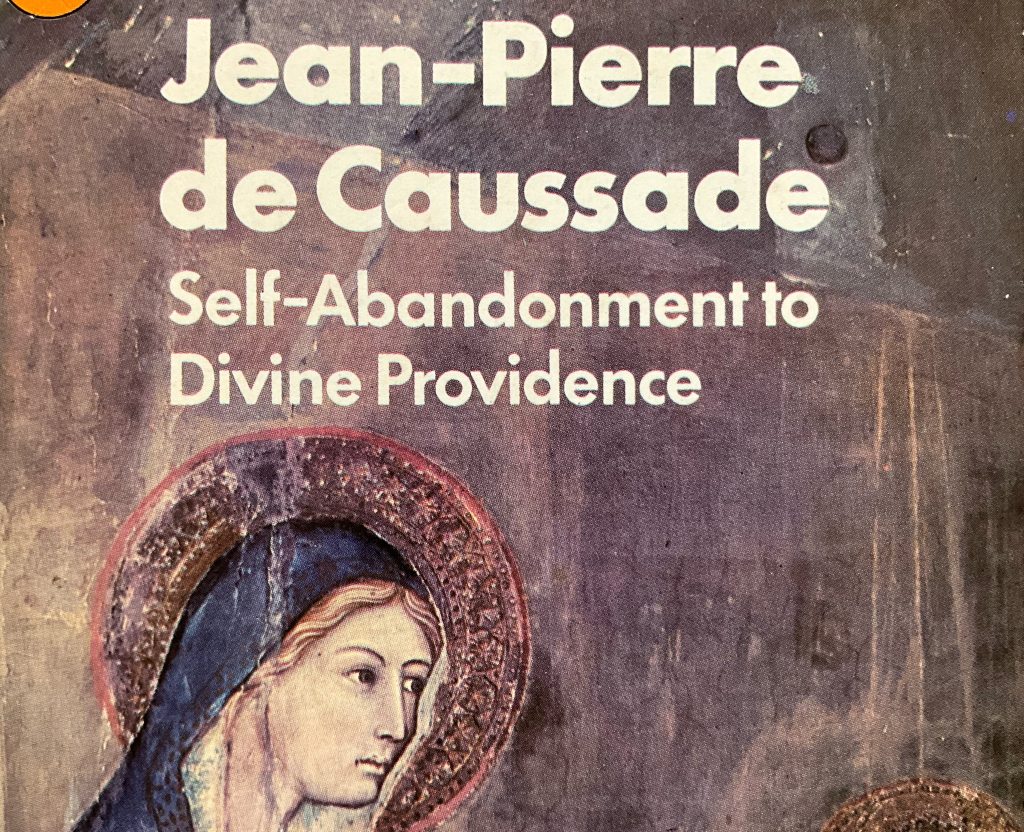
De Caussade in Self-abandonment to Divine Providence emphasises how welcoming Christ in Communion focuses the welcoming of him in every circumstance that comes our way. Jesus is as ready to meet us in our circumstances as he is to meet us in Bread and Wine. To be glad of heart in every situation is a grace given by God, a grace we have to seek – just as Mary sought divine help to brave her expressed fear: ‘How can this be?’
How does Jesus come into our lives?
He comes by the Holy Spirit.
He comes by the Sacraments.
He comes by the Word of God.
He comes by holy people as they rub off on us.
He comes by circumstances – which links to a second question:
Why does Jesus come into our lives?
He comes to bring us into his life, death and resurrection – and here is the rub.
Look, as the Church invites us to do so today, at our patron Saint his Mother.
She was first to welcome Jesus into her life – and where did it lead her?
She was led into hardship, led to a shaming pregnancy and a Cross of sorrows before taking the shine of glory.
I want Jesus in my life. I want the shine of glory – but, if I am honest, I don’t want hardships!
This is where Jesus sorts us out because it’s by endurance of hardship that salvation is forged.
The great Christian writers speak of the need to gratefully accept most of what comes our way, including suffering and hardship.
Sharing life with Jesus means self-sacrifice.
Mary gives us the clue. I am the Lord’s servant, she says to Gabriel, let it be for me according to the Lord’s will and not my own, echoing our reading from Hebrews ‘See, God, I have come to do your will’.
Jesus gives us the Holy Spirit, the sacraments and scripture.
He also gives us hardships but we have to decide whether to endure them or quit.
In that decision we bring Jesus closer or we push him further away.
As we approach Christmas Communion it is traditional to make a self examination and, for some, to present this to the priest as part of the celebration of the sacrament of reconciliation.
Whether we go to sacramental confession or not these days have a penitent feel for all who sing phrases like cast out our sin and enter in, be born in us today.
Through taking time this week to make a self examination we will recognise our inner moods and be able to count our blessings even if these are like rainbows in the rain. We will see as we examine ourselves how much our spiritual growth and maturing is tied into the way we are dealing with our circumstances.
The means of self knowledge and sanctification don’t necessarily lie in a special book or form of prayer, the right sort of retreat or spiritual guide.
The means of our sanctification, of our cleansing from sin, healing from hurt and so on lies in the day to day circumstances of our life as we welcome them as the Lord’s gift.
As we read in Psalm 112:6,7 ‘the righteous will not be overthrown by evil circumstances…he does not fear bad news, nor live in dread of what may happen. For he is settled in his mind that the Lord will take care of him’.
Our Lady’s confusion mentioned in the Gospel gives way to an act of will – let it be for me according to the Lord’s will and not my own. That spirit moves into praise in the Gospel narrative as in her Magnificat.
‘My soul doth magnify the Lord’ she sings. Mary does not magnify or blow up the challenge of her unsettling circumstances as one pregnant out of wedlock but instead magnifies the Lord as the One who will lead her through this temporary humiliation.
The spiritual writer De Caussade in his book Self-abandonment to Divine Providence emphasises how our welcoming of Christ in the Blessed Sacrament Sunday by Sunday focuses the welcoming of the Lord in every circumstance that comes our way.
Jesus is as ready to meet us in the circumstances of our life as he is to meet us in the Sacrament of Bread and Wine.
To be glad deep down in your heart in every situation is a grace given by God, a grace we have to seek – just as Mary sought divine help to brave her expressed fear: How can this be?
If we aren’t glad at heart it may be because we’re not fully submitted to God’s will revealed in the circumstances of our life.
As a spiritual writer once observed, we only fear those things we haven’t submitted to God.
The prayer of self-examination is the prayer of one glad at heart.
Someone who’s not resigned in a positive way to the will of God revealed to them in the circumstances of their daily living is often someone being worn away and damaged inside of themselves.
The better way is expressed by St. Paul when he calls us in 1 Thessalonians 5v1618 to give thanks in all circumstances for this is the will of God in Christ Jesus concerning you.
Jesus comes into our lives – by the Spirit, Sacrament, Scripture or by circumstances – to bring us into his own life, death and resurrection.
He is ready to help us face discomfort so that his resurrection life may grow in us by the Spirit and our old proud and sinful nature is further humiliated and put down.
As we prepare for Christmas may we have our spiritual ears open to hear God speaking into our lives so that we might decrease in self orientation and gain within us the love of Christ that will never fail.