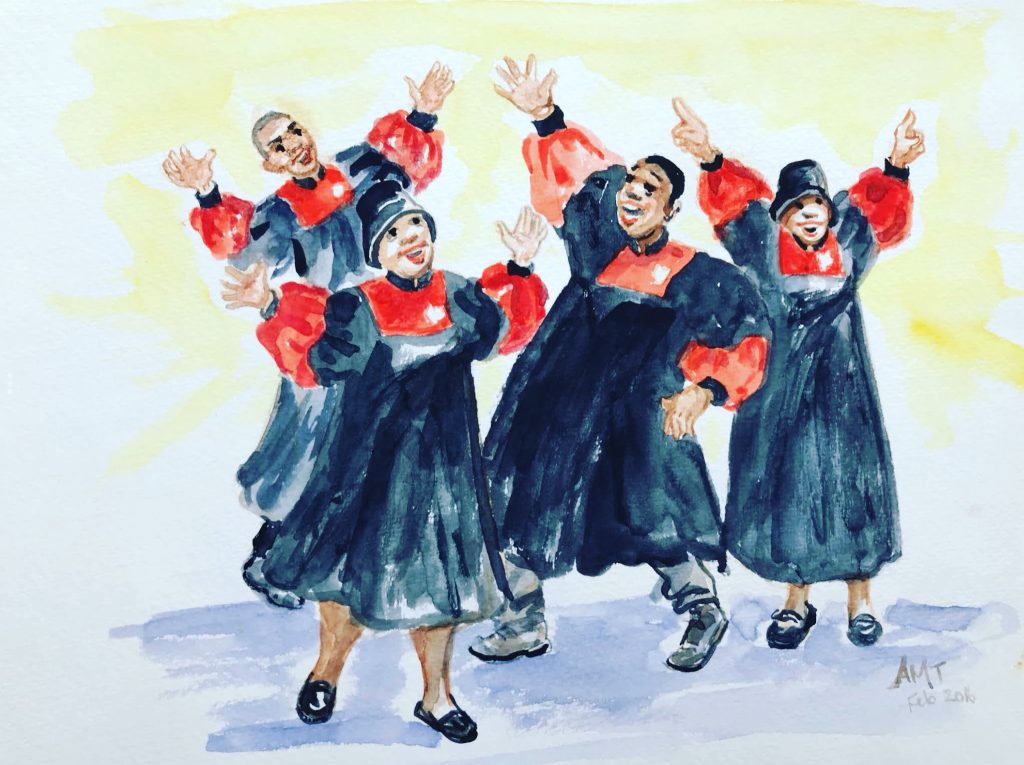
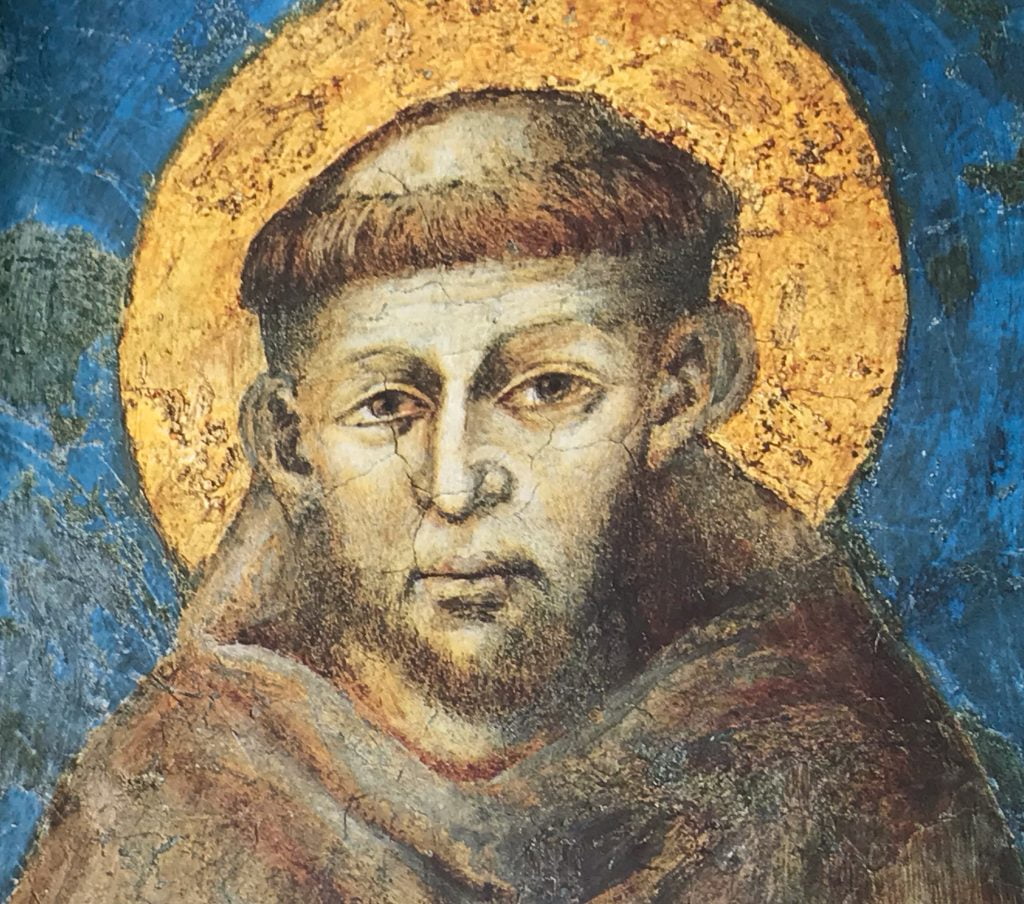
This morning’s scripture sets the natural processes of seed time and harvest depicted by my wife Anne within a bigger picture linked to what grows within human souls and shapes the whole creation – the word of God. Our spiritual frustrations at best express discomfort at the way we are, the way the church is, and the way the world is, as we seek to give and give and give again. In that pursuit we are made like Christ as we trust him to work for our perfection which is inseparable from the perfecting of the church and the world.
‘Other seeds fell on good soil and produced grain, some a hundredfold, some sixty, some thirty. They who have ears, let them hear.’ Matthew 13:9
God who gave life to all has given his own life to live within us and bear fruit in plenty.
That’s the wonder of Christianity – love, joy, peace, patience, kindness, generosity, faithfulness, gentleness and self-control growing in souls and church communities – the fruit of the Spirit listed in Galatians 5 growing through us from fertile spiritual ground.
This morning’s scripture sets the natural processes of seed time and harvest within a bigger picture linked to what grows within human souls and shapes the whole creation – the word of God. Our first reading from Isaiah 55 affirms ‘the rain and the snow… water the earth, making it bring forth and sprout, giving seed to the sower and bread to the eater, so shall my word be that goes out from my mouth; it shall not return to me empty, but it shall accomplish that which I purpose’. God who gives life by the rain gives us his life by the Spirit to bear fruit in those who trust in him.
The spiritual anguish we feel at our unfruitfulness is voiced in our second reading as resonating with the anguish of creation at its imperfection. ‘For we know that the whole creation has been groaning together in the pains of childbirth until now. And not only the creation, but we ourselves, who have the first fruits of the Spirit, groan inwardly as we wait eagerly for adoption as sons, the redemption of our bodies’ (Romans 8:22-23).
It is heartening to know our impatience with shortfalls in love, joy… kindness… self-control and so on is something godly and big picture. Our spiritual frustrations at best express discomfort at the way we are, the way the church is, and the way the world is, as we seek to give and give and give again. In that pursuit we are made like Christ as we trust him to work for our perfection which is inseparable from the perfecting of the church and the world.
I was brought up on the seven deadly sins – those were the days! Don’t get me wrong I’m talking about a list in my Centenary Prayer book marking the Centenary of the Oxford Movement. In just 7 years we’ll be celebrating the bicentenary of John Keble’s sermon which marked the launch of a renewal of the Church of England for which St Bartholomew’s must be the tallest monument.
Through that renewal movement we rediscovered the Church of England as no Protestant body but, to quote the revised Catechism, ‘the ancient church of this land, catholic and reformed’.
We are catholic Christians, not Papists or Protestants but travelling a middle way.
Back to the seven deadly sins listed in my Centenary Prayer book. I discovered a mnemonic for them: PALE GAS – the mnemonic points to killer gas chlorine. Our struggle against the harmful workings of sin is one against pride, anger, lust, envy, gluttony, avarice and sloth.
A practical way of checking your imperfection is to go through the list ticking where appropriate: pride, anger, lust, envy, gluttony, avarice and sloth. The first sin is said to prevail among youth – pride – and the last one to prevail among the elderly – sloth, laziness.
To build the spiritual fruitfulness invited by today’s readings we need to check our sinful tendencies and there are plenty of confessional boxes in St Bartholomew’s once you’ve done that – though, speaking as a priest here, you need to find one with a working light inside!
Checking PALE GAS is a good aid but it can at times be a daunting, depressing business especially when you find your sin list doesn’t change so much year by year.
A Mirfield Father put me on a more positive course linked to today’s scripture. Besides PALE GAS he suggested why not occasionally use the fruit of the Spirit listed by St. Paul in Galatians 5 verses 22 to 23 for self-examination? Ask yourself how much love, joy, peace, patience, kindness, generosity, faithfulness, gentleness and self-control is growing in my life?
It can be heartening to look back on your day or your week and list positives or shortfalls linked to a key factor in Christian life, our relationships with other people. Ask yourself occasionally how much more kindness, generosity or faithfulness or self-control is growing in my life than last I thought about it. Laughter and self-mockery are a sign of joy which is a fruit of the Spirit you can’t keep to yourself.
I am no comedian but I love to laugh and on occasion make people laugh. The best comedians are humble folk. In the Times last week Mathew Parris mentioned the actress Penelope Keith of Good Life fame who worked with him on his Great Lives series profiling the hilarious Morecambe & Wise. Matthew asked Penelope what she thought about the legacies comedians may or may not leave behind. She had just returned from Italy and replied, “When you see ancient Rome, you can’t think our legacies matter much”. A beautiful, telling, humble reply.
‘Other seeds fell on good soil and produced grain, some a hundredfold, some sixty, some thirty. They who have ears, let them hear.’
We are working in a cause that will outlast us, the transforming of this earthly kingdom into the kingdom of God. In that work we groan at our shortcomings and those of the rulers of this world as creation itself groans at its despoiling. Despite this double anguish we should take heart – the word of God we celebrate this morning is at work and will accomplish its purpose. It will bring a legacy grander than Ancient Rome, ‘a kingdom of truth and life, a kingdom of holiness and grace, a kingdom of justice, love and peace’.
God who gave life to all has given his own life to live within us and bear fruit in plenty in the building of his kingdom. God’s life is shortly to flow into us and then through us in the Blessed Sacrament, given that we may give – and give – and give! ‘They who have ears, let them hear.’