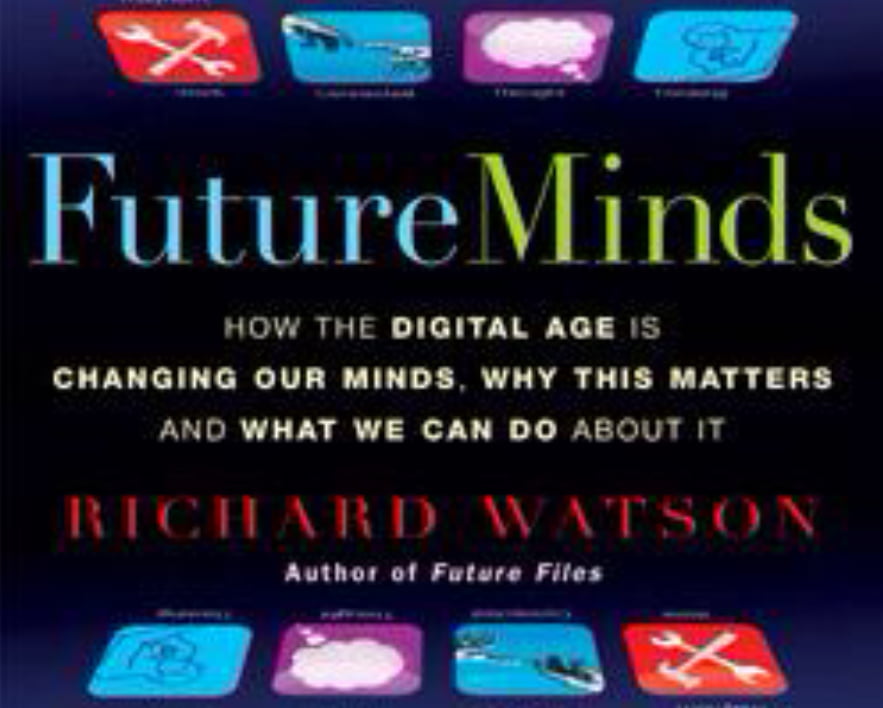
In his ‘Future Minds’ Richard Watson considers how the digital age is changing our minds, why this matters and what we can do about it. The sheer volume of information brought our way by the internet is drowning out learning and wisdom. In this book I noted Einstein’s distinction between what he called the intuitive and rational minds coupled to his warning: ‘The intuitive mind is a sacred gift and the rational mind is a faithful servant. We have created a society that honours the servant and has forgotten the gift’. Part of healthy living is giving our minds space day by day for reflection upon our life situation and engagement with creative study as invited by today’s Gospel where we read ‘Mary treasured all these words and pondered them in her heart’ (Luke 2:19). Tomorrow, New Year’s Day, is the first day of the rest of our lives as well as 2024. Will it be a holiday, a holy day, in a double sense in which I can take time to assess what’s really important in my life, what are the main things, and how I can keep the main things the main things?
Is there anything new in Christianity?
Surely it’s the same old truths that we need to be continually apprehending!
As G.K. Chesterton wrote Christianity has not been tried and found wanting; it has been found difficult and not tried.
In today’s gospel we have Mary’s example of dwelling on Christian truth with an eye to implementing it. When the shepherds saw the circumstances of the nativity, ‘they made known what had been told them about this child; and all who heard it were amazed at what the shepherds told them. But Mary treasured all these words and pondered them in her heart’.
How do we recover this capacity to treasure the mysteries of Christ and ponder them in our heart so we can better put our faith into practice?
We need, some of us, to get more recollected in heart – but this may need the reframing of our mental processing as well.
Some time back I picked up a book called Future Minds by Richard Watson that considers how the digital age is changing our minds, why this matters and what we can do about it. Watson picks up on how the sheer volume of information brought our way by computers and the internet is drowning out learning and wisdom. I took notes on the book and copied especially Einstein’s distinction between what he called the intuitive and rational minds. ‘The intuitive mind is a sacred gift and the rational mind is a faithful servant’ Einstein wrote. ‘We have created a society that honours the servant and has forgotten the gift’.
Our minds are given us to reflect deeply on the world around us and help us make a difference. This intuitive sense is far above the so-called rational mind which, computer-like, serves processing information. Part of healthy living is giving our minds space day by day for reflection upon our life situation and engagement with creative study. The technology that serves to gather knowledge and spread information at high speed can distract us from this vital activity of what we call cogitation, chewing things over in our mind.
As cows eating grass must chew the cud for it to create milk so our take up of information needs pauses for reflection by the intuitive mind if we are to be creative. Through the discipline of mental reflection we mirror our creator in his oversight of the world and enter more into his creativity.
Tomorrow, New Year’s Day, is the first day of the rest of our lives as well as 2024.
Will it be a holiday, a holy day, in a double sense in which I can take time to assess what’s really important in my life, what are the main things, and how I can keep the main things the main things?
This may be a good Sunday to be reminded of the fourth commandment: ‘Remember the Sabbath day, and keep it holy. For six days you shall labour and do all your work. But the seventh day is a Sabbath to the Lord your God’. As Christian believers in a 24-7 culture we need to attend to the truth of the Sabbath which is a call to turn attention once a week from the work of the Lord to the Lord of the work and what he’s got to say to us about the main things in life!
Years back God’s warning about good time management, the 4th Commandment, was inscribed on the church wall for people to see every time they left the altar after Holy Communion.
Good time management isn’t the be all and end all but it’s a vital component of living a peacable life. For myself I take the most part of a day a month to reflect on my work as a priest and spiritual director and how best to prioritise. I would recommend to anyone though this discipline of sitting down for a time with nothing much in front of you and just thinking. I spent Thursday in the British Library doing just this. One fruit of such a discipline has been Anne and my double autobiography, ‘Journeying Together’ which I commend to you and have brought some copies available for a fiver.
You don’t need to go to the British Library to think deeply. Yet the vital and vitalising release of the mind’s intuitional gifting needs some sort of setting a time and a place to get off our mind’s rational treadmill to go back to Einstein. The mind, though, can’t take us where the heart refuses to go. This brings us back to the dual mention of mind and heart in our text from Luke 2 verse 19: ‘Mary treasured all these words and pondered them in her heart’.
Just as a discipline of mental reflection serves the good organisation of our life so a discipline of daily prayer aids our Christianity. Prayer in one definition is the lifting of heart and mind to God. For example if I decided to take the news sheet away and use it for prayer supplemented by browsing the internet to Twisleton.co.uk to read this sermon again that would be a good decision. Then I could read the scripture, and the events and sick list, until something tugged my heart. When I did this – reflected earlier in the week on today’s readings in preparation for this morning – I was struck both by the invitation to ponder in Luke 2:19 and by the last phrase of the first reading, Isaiah 62:3 ‘You shall be a crown of beauty in the hand of the Lord, and a royal diadem in the hand of your God’.
When I put thought together for this sermon I picked up a heart tug from that verse and used it at my daily prayer time. If we find prayer difficult – who doesn’t? – it may well be because we need to settle our mind from being a tree full of monkeys so we can attend unimpeded from our heart to God. The main discipline of prayer is making that 14” or so journey from the brain to the heart so we can centre our being on God heart to heart. As some of you know I commend the Jesus Prayer as a helpful means of attaining this settling – ‘Lord Jesus Christ, Son of God, have mercy on me a sinner’ – and am ready to explain it in more detail to any interested.
There is nothing new in Christianity, only the age old truths we need to get refreshed and applied to our lives. Let’s make 2024 a time to take a leaf out of Mary’s book, setting apart time to treasure the main things in life, Sabbath time, and to pray, so our outward actions may ring more true to the faith we profess!